Wednesday, 2 January 2019

When That Call Happens

No one ever knows when it will happen. We can usually recognize that we are starting to have a problem, but we never know what will be the trigger that draws us into the darkness. Every one of us has a call that has stuck with us, most of us have several. Occupational stress injuries and PTSD have come to the forefront in Front Line Emergency Services over the past several years and I for one am truly glad that it did.

For years there was a mind set that we were required to be tougher than the average human. There was an expectation that regardless of what call was done, a Front Line Emergency Services person would "suck it up" and get back to work. There were calls to be done and there was no time to sit around and process the situation we were just in. When a Front Line practitioner does not get this opportunity the emotions that are felt on that call are pushed inside. They are buried with the thought, "I will deal with that later." This becomes problematic, because as the shift continues on, calls keep happening, there is paperwork to do, there are meetings to have, and there is education to be done. What did we do then, we continued to push it down and said to ourselves, "I will deal with this when I get home."

At the end of the shift, we head home, we are tired, we are carrying our day or night, and as we walk through that door we are greeted by those people or animals we love the most. We push those feelings deeper and concentrate on that time with our loved ones, before we go to bed. Once that day is finished and that call is buried deep inside we get up and we go to work the next day and as usual we are busy. So we sort of forget about it and think it is dealt with. This could not be further from the truth.

As this process repeats itself over and over again, the hole we push these feelings into fills up. For some it fills quickly, for some it takes many events, and many years to manifest. When it manifests though, it shows up slowly at first. Irritable behavior, maybe showing up late for work once in a while. Often people start to indulge a little too much, booze, smoking, gambling, yes even promiscuous behavior. These are warning signs that you need to pay attention to. These signs are almost like an early warning system to say, "hey friend, you need some help.."

If these signs are ignored, and the attitude of, "I'm fine, I don't need help." takes over, these signs become worse. The Front Line Emergency Services person starts to get more complaints, misses whole tours completely, lashes out at friends, and co-workers, lashes out at family members. These signs are a clear indication it's time to get help. This is the way it used to work which left so many people with deep scars that were never properly dealt with. I can assure you this had devastating results for some people, their families and their Emergency Services families.

Our new method of thinking, and practice, though slow in it's growing, is a vast improvement. Normally now Front Line Practitioners are given that time to decompress, even if it is busy. They are offered peer support from Critical Incident Stress Management teams, there are employee resources within every facet of Front Line Emergency response. This is to ensure people have access to better help and treatment after critical events. What does this do? It allows the practitioners to decompress, deal with their personal feelings, deal with each other's feelings and hopefully process the situation and allow the stress of the event to be greatly reduced. These resources will also  help to recognize early symptoms and allow the practitioner to get into the treatment they need.

If you are reading this and you are a Front Line Emergency Services Practitioner, Police, Fire or EMS, and you recognize any of these signs or symptoms please reach out. Reach out to a peer, a friend, a supervisor, reach out to me through my blog. The results of untreated Occupational stress injuries, or PTSD can be devastating. All of you are heroes, and you are all amazing, selfless and the world is a better place because of you. You are not indestructible though so please don't suffer in silence, you are NOT alone, we all have demons. Take the first step, and reach out for help. If you notice a colleague that is acting different, don't be afraid to approach them and just ask. Someone did that for me once, and it may have saved my life. Let's be safe out there, and watch out for one another. Please like and share this post if you found value!

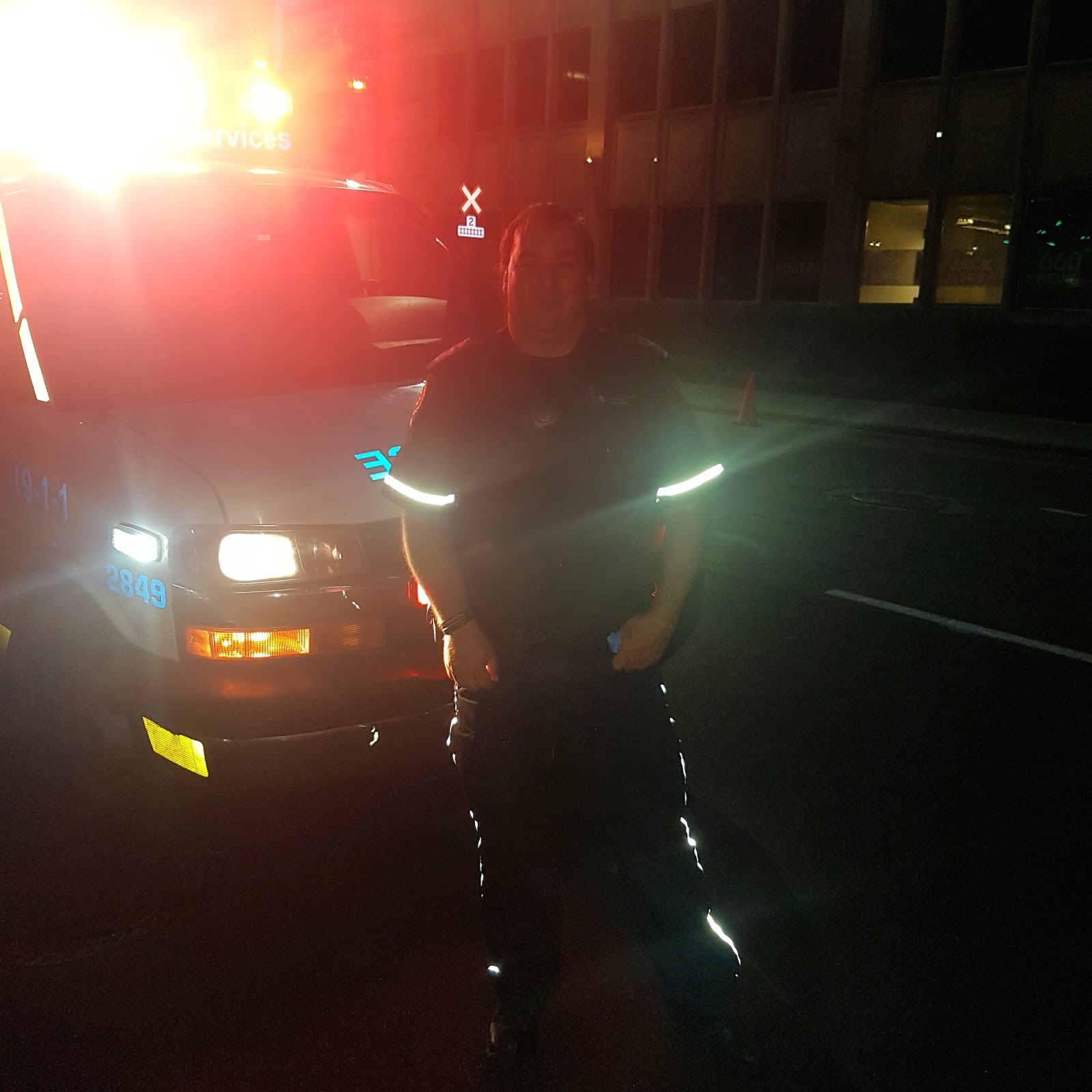
Thursday, 27 July 2017

What Is The Why?


What an incredibly long hiatus this has been. Feel like I haven't written in forever, and when a couple of people questioned why, it got me to thinking. The word why is a powerful word, and most of us take it for granted. This is the word that drives everything we do, and who we become.
Take a minute to let that sink in. The Why is what drives us forward. Without it we would literally sit still. Every day has a reason that we get out of bed, every shift has a reason we put on the uniform and every hobby has a reason we love it. It became very apparent to me in some recent training I attended that taught about de-escalating situations and disengaging dangerous situations.

While I sat through this training, I came to a realization, and it brought me back to why I put this uniform on in the first place almost 20 years ago. I was raised by wonderful parents who encouraged me to be the best me I could be(as corny as it sounds It is the truth). They also taught me to lend a hand to friends and strangers alike. They instilled a set of values in me that included helping others. Armed with this value system I heard a speaker in my young adult life who was greatly inspiring and also a former Paramedic in Ontario. This speaker spoke a lot about the impact Paramedics can have on a family. From that moment on the spark was lit and the rest is proverbial history.

Over the last several years the system under which we work has changed. Budget constraints, staffing shortages, long hours, long hospital waits, psychological ramifications of continually meeting people on the worst day of their lives just to name a few. The Why started to get lost and the focus changed, the focus became survival.


Just get through the shift, pray we don't get a late call, look out for ourselves, and when is pay day?


This isn't an exclusive problem to our service, it's an international pandemic that is causing paramedics to leave the industry at alarming rates. It is also causing severe psychological trauma and in several cases has caused self inflicted tragedy.

When I think about this it breaks my heart to see what I value as an incredibly noble career being ravaged by such problems. I do not claim to have answers but instead I thought I could bring people back. Try to shut out all of the noise, remember the camaraderie, remember the impact we have, remember the why that drove you.
The problems we face in EMS are not going away anytime soon. Bit by bit progress will be made, but it will take time. Only now have employers and the governments started to realize the toll this career has on us as individuals. If you or anyone you know is struggling, reach out to your friends, your loved ones, reach out to me if you need to. I will be there for any of you, as each of you is a brother or a sister to me and YOU are a part of my why.  For me, my why is the helping of others, families, patients, coworkers, strangers, anyone that I can help.
We are so much more than people realize, and that is something to be immensely proud of. Take the time to refocus on your why, look out for each other, and despite the system falling down around us, let's stick shoulder to shoulder and hold each other up. Please like and share this post with your friends and families!! 

Saturday, 7 January 2017

EMS Culture, What Changes Us And Why?


As we move into 2017 I think about the way EMS was, and how it is today. I find myself wondering what has changed and why? Our culture has evolved. In some ways good and in some ways not so good. This career takes it's toll on all of us. It is an inevitable fact that the things we see have an impact on us, both physically and emotionally. I was recently in a training course that has been established to help front line first responders recognize and respond to psychological injuries within ourselves and our peers. This training is a valuable addition to our arsenal in self care.

My question, and this question was imposed to me recently,  is why is it inevitable? Why are we changed by this career? I only had the old school answer of well this is just how it is. When I began my career in EMS there was very little talk of psychological injury or mental health in first responders at all. Many first responders suffered silently, and alone for many years. Some of those people moved on into other fields, and some continued in EMS, untreated, and this untreated psychological injury has manifested in some to make them bitter practitioners that as a defense don't let people close or treat new staff and students disrespectfully. This was not their fault, and when we think about or meet these "grumpy ass medics" we should ask ourselves why are they this way. Is this a years long coping mechanism to protect them from some of the horrifying things they have seen? On the flip side of that some people had many great supports and took care of themselves when no one else would and are still happy and love doing what they do. Does that mean the person who is "grumpy" or suffering silently did something wrong or deserves to be treated differently? Absolutely not. The driving factor behind change is recognizing the way something was done is not necessarily the right way and that evolution is necessary.

When you continue to do things the way you always have, you will continue to get things you have always gotten. It is time for change in 2017, and it is time to understand that those people suffering from psychological injury are just that. They are injured, no different than a physical injury it's just that you can't see it. I have been more cognitive of this as of late and realized that it is important for us to acknowledge mental health awareness and not let the way we did things ruin it.

I was excited for this training that we had and I look forward to having more training down the road as the drive to end the stigma of mental illness in first responders continues to evolve. To all of those people involved in bringing forward these initiatives I want to salute you and thank you for your hard work. Change is slow, and is often resisted, but keep up the effort. If our methods don't change our profession won't evolve. This evolution in our profession is a giant step forward to creating longevity for all of the talented professionals who put their psychological and physical health on the line every day to protect the public at large.

Thank you for reading, hope you will like and share this article with your family and friends if you enjoyed it.

Monday, 8 August 2016

The Inspiration Of True Compassion


Sheepdog, PTSD

Yesterday I was inspired. I got to work with someone that I knew by name and reputation only. I listened intently as he spoke with one of the many vulnerable people within our city. There was something in his voice that went beyond the words that were being spoken. They came from a place that on occasion, we as Paramedics and EMT's forget about. I was in awe as he spoke quite directly, and plainly with our patient about their situation. This place that we sometimes close up and protect, so that we can protect ourselves, is called compassion, real, genuine compassion.

It goes beyond empathy, it goes deeper than just helping. Compassion is and was the driving factor that brought most of us into this business. Many of us, myself included, let that compassion slip away and it takes something special to remind us that helping people and compassion are the fundamental values of medicine. It is true that because of problems within the system and the tragedy we see we allow ourselves to become hard. We often let the people that abuse the system cause bitterness and then our compassion gets left out when we go to people that just need our help. This career changes us, and not always for the better.

I felt privileged to work with Dan yesterday and as I got to know him I learned another fact that increased my respect for him even greater. Many of you know this, but I had not put it together at this point. Dan is one of the founding members of The Sheepdog Lodge. The Sheepdog lodge is a not for profit organization that allows military veterans, as well as emergency first responders to come and stay there for free with their families. They offer a peer supported weekend away from everything that allows these people, suffering from PTSD, or other Occupational Stress Injuries, to focus on themselves, their family, and their recovery. This has been a tremendous undertaking. Dan and the other members of their steering committee have a true passion to help veterans and first responders recover from occupational stress and PTSD, and their role is an important one. A place that is safe, disconnected from the world. The lodge is heated by wood burning stove, there is no wifi, no television, and is your home for the 3 days you are there. Visit the website to learn more, and to offer help if you are able, http://www.sheepdoglodge.com.

Military veterans and emergency first responders choose to protect the public by offering their services, and in doing so are forced to see things that no person was ever meant to see. These events build up and take a toll on people mentally and physically. The Sheepdog Lodge is completely volunteer based, and the people are paired with a volunteer of the same discipline, someone that speaks the same language and can offer real support and understands their situation. Dan shared with me that The Lodge could use many more volunteers, his colleagues and himself offer up a short training program to help volunteers host families in the cabin for a weekend. The host is there to help, listen, cook and clean, while the person that is there focuses on why they are there. If you have a desire to help you can contact them through their website and they can help you from there.

The Sheepdog Lodge envisions a time when there is a nationwide community of veterans and first responders that are available to mentor and support other veterans and first responders. This statement copied directly from their website states it quite plainly. The vision for The Sheepdog Lodge is simple. Help each other to remain strong, healthy, compassionate and recover from the stresses that we face every day in our careers helping others. We help others because it is what we were built to do. The Sheepdog Lodge is finally a place that we can go when we are the ones that need help.

I would personally like to thank all of the staff and volunteers at the Sheepdog Lodge for their strong dedication to helping others. Please visit their site at The Sheepdog Lodge, read more about what they do there, and watch their story that appeared on CTV news  earlier this year. Please share this post with your friends and families to spread the word about the Lodge.

Saturday, 21 May 2016

I Always Have Your Back, Except When.....

I know it's been a long time since I have written, so without adieu, here is today's post. An anecdote if you will. It was a warm shift that day, and my partner and I had been having a fun shift. No different than any other day. We had been doing some calls, and had had some down time. The day was a fairly typical shift and we didn't expect anything out of the ordinary.

The tones go off for a call to an older home in an older neighborhood for a lady in distress. The details were non specific and as we responded to the call it seemed like a normal type of call with no unusual expectations. As we arrived on scene the house was quite dark, and there was no light on on the outside. We approached the home and knocked on the door, a faint voice inside said to come in. As we opened the door we were greeted with no one. No one was in the foyer, but there was some piles of papers, and random junk. The house itself was not unkempt, just the entry way.

We called into the home to see where our patient was, and she stated she was upstairs, so I had asked if we needed to come up there or if she would come down to us. Immediately we got an uneasy feeling in the home when she insisted we stay down stairs. As we looked around the home was definitely older and had some unusual statues in it. There was nothing specifically odd about the home, but we had that uneasy feeling. As we patiently waited for our patient, she appeared after some time, crawling from one room across the floor towards another room... Now if you have ever seen the movie The Ring and remember the way the girl crawls out of the well...... Well that's what the patient looked like, crawling across the floor in a choppy almost animated state. The uneasy feeling intensified at this point, but we continued to wait at her request.

When she did finally allow us to come upstairs, we learned that she had an ankle injury and this is why she had been crawling. So we assisted her down the stairs and onto our stretcher, and made our way out to the ambulance. This is where things got weird. As we are assessing the patient and determining her history she looks me dead in the eye, and with the most serious voice I have heard, she says to me, "My sister is a satanist and I think she is trying to kill me!" To which my partner responded by slamming shut our tough book, and literally bolting straight out of the side of the ambulance, leaving me alone with this patient in the back. Now the humor to this story is of course my partners reaction to the patient's words. There was of course nothing to fear, it was just something that the patient needed help with.

When we got to the hospital and had dropped off our patient I had asked my partner, "what was with that reaction?" I was laughing when I asked him, and we both had a good laugh over his reaction. I know some people might read this, and not see the humor the same way I did,  but in our career it's little things like this that keep us going. The patient was cared for appropriately and brought to the hospital for the help she needed. I just had to laugh at my partners reaction to her words, and to this day it sticks in my mind as one of the more memorable calls in my career as a Paramedic.

Monday, 11 April 2016

EMS Credibility A Fragile Commodity

When paramedics arrive at the hospital with their patients and report to triage it's important to have our ducks lined up. The credibility of a paramedic is fragile when dealing with triage nurses and physicians in hospital. They often don't understand the conditions in which we work so it is vital that we are ready to give a solid triage report. When things go wrong on a call that's OK, that happens. This can sometimes look bad when we roll into the ED, which is why our credibility and out report is so important.

If things go wrong on a call, it's not a time to panic, it's just important to be organized in your report to triage. If we are running bush league and don't have that solid report, then we are presumed to be bush league. Don't forget our world is usually quick and dirty, they call us ditch doctors for a reason. To our nursing colleagues, it is important to remember that as practitioners we do our utmost best for our patients, just as you do. When you aren't there it is important to hear the story before you pass judgment.

In someone's home, or the back of an ambulance we potentially deal with poor lighting conditions, cramped spaces, and  limited help. These are not excuses, because this is also where we are specialists.  I once heard it said, 

"There will always be someone better at intubation than you, there always be someone better at IV's than you, there will always be some one better at assessments and differentials than you, BUT nobody can do it like you can with the wheels moving." 

This quote had always stuck with me, because it's true. We specialize in these environments and that is what sets our world apart from the world of the ER. To that end though, not every call goes perfectly. That in and of itself is not the end of the world. To maintain our credibility it is important to be honest when things go wrong, not make excuses, just be honest. Communication of what has went well and what has not gone well will go a long way to maintain the respect of your colleagues. Some might say our colleagues shouldn't judge our performance, and for the most part they don't. They do, however, know when we aren't honest with them. 

At the end of the day as paramedics and EMT's you work very hard for your patients, and the vast majority of the time you provide excellent care. That is why when a call goes sideways and your bringing them into the ER it's OK to tell them that call went poorly, these things happen  for various reasons. Your credibility will remain much higher with your colleagues if your straight up about what happened, and then as a larger team of professionals everything still gets taken care of! 

Let's continue to progress the profession and build relationships within our professional medical community. Doctors, Nurses, paramedics, RT'S, and the list goes on, all work hard to provide excellent care for our patients. Remember we are all a team and cohesiveness translates into effectiveness. 

Please like and share this post with your friends and loved ones!! Join the discussion and leave your comments below!! 

Saturday, 26 March 2016

Through My Eyes

When I began my journey to become a paramedic in 1998 and stepped into a world much larger than myself, I had some misguided conceptions of what this job would be. As time has gone on I have seen the world through different eyes. When we come into this career we are all fresh and eager and feel like we are bullet proof ready to take on the world, save lives and run on water! The reality of this job hits pretty hard, and pretty fast. Not to say that the career is not worth it, because it is. There are just things that no amount of training can prepare you for.

When I was in school they told me I would see things. They told me I would see things that would stick with me, forever. During training they prepare you for the dead, they try to desensitize you to the ugly things you might see. The smells you might face. The horrible things that people will do to themselves or to others. They try to get us ready to handle the things that no one else should see. Through my eyes though, I was never prepared for the hurt, the pain, the turmoil or the agony I would see in the faces of families and loved ones of the people we were trying to help.


Those are the images that have stuck with me, and have burned themselves into my soul. Arriving at a home for a person who has just gone into cardiac arrest. The only words I hear as I approach the daughter doing CPR are the words of his wife, "He can't die, He is my life!" Uttered with such desperation that a lump forms in my throat as I kneel beside him to start treatment. The questions from a gentleman in a car accident asking about his young daughter whom I know is passed away, but now is not the time to tell him. The friends of a young girl asking about her condition. She was the one doing things right, wearing her seat belt, had a designated driver. Her life lost as a drunk driver smashed into their vehicle right where she was sitting. Their faces burned into my memory with the tears, and the pain they feel. The agonizing cry of a father who has just witnessed his daughter go into cardiac arrest. The sound rings in my ear even now as I write this. The training we receive is exceptional, the care we provide is second to none, and the people we help are truly the reward that make this career worth getting in the truck every day. These memories are the thing that I was unprepared for and I believe that sentiment is shared with many of my colleagues.

I don't tell you these things to discourage your career path, or even to invoke sympathy. I tell you these things so that you can prepare. Psychological safety and well being is a big deal in emergency services, and if you are not prepared for the things you will see, or the families of the people you are helping, it can take a toll on you. This glimpse into the world through my eyes is my way of trying to help you understand what we go through and also to prepare you as you enter this field. This is the most rewarding career I could have ever found for myself, and I truly love what I do. I encourage others that feel drawn to this career to pursue it. This career takes a little extra something as does any emergency service. Those people that find a passion for this career will be the people that continue to move it forward in a positive direction. They will continue to make pre hospital care a dynamic and ever evolving industry.

When you are doing your schooling take time to learn about work life balance. Find things to do that you love outside of this career. If this career becomes your whole focus you will lose appreciation for the beautiful things that are out there. My career went full circle and I am hoping that these anecdotes and stories can help prepare you for your journey. I hope you enjoyed the read, and encourage you to share it and like it so others can see it too.


The Never Ending Search for Resilience.

  Introduction Resilience is a complex concept. It's the ability to bounce back from hardship and stress, and it's what helps us sur...